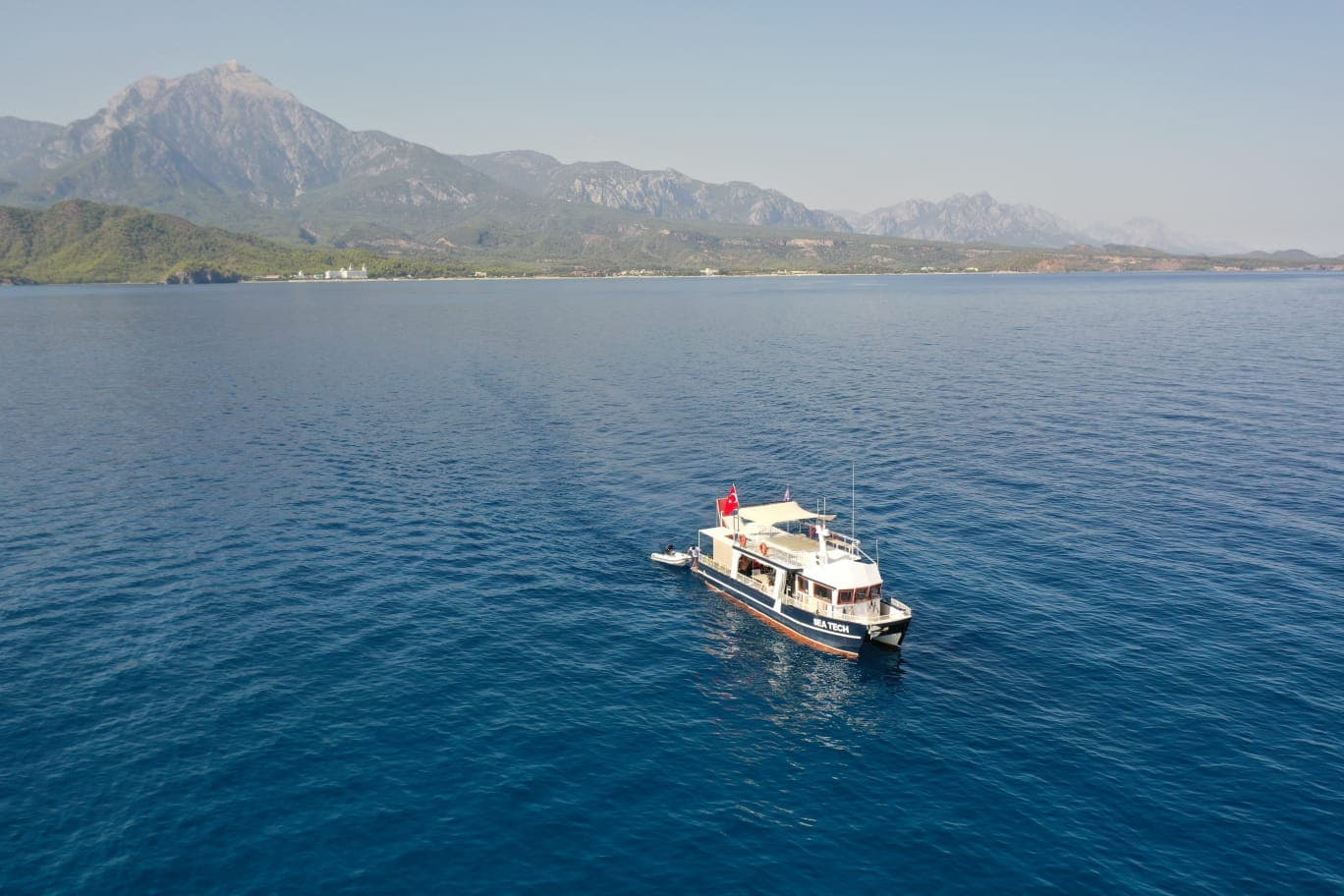
Airplane C-47 Dakota
Turkey, 🇹🇷 TurkeyAdvanced
Depth35m
DifficultyAdvanced
Description
The C-47 Dakota near Kemer on Turkey's Antalya coast is one of the country's signature wreck dives, where a deliberately sunk Douglas C-47 military transport aircraft rests at thirty-five meters on the Mediterranean seabed, its iconic silhouette creating one of the most photogenic and historically resonant artificial reef sites in Turkish waters. This advanced dive combines deep wreck exploration with the thrill of encountering one of aviation's most legendary aircraft in its final, underwater resting place. The Douglas C-47, the military workhorse that helped win the Second World War and went on to serve air forces and airlines around the world for decades, found its retirement from service and rebirth as an artificial reef in the warm Mediterranean waters off Kemer. The aircraft was carefully prepared for sinking, with hazardous materials removed and access points created to allow both marine colonization and safe diver exploration. The result is an artificial reef of exceptional quality that serves both ecological and recreational purposes. At thirty-five meters, the Dakota demands respect from even experienced divers. The depth limits bottom time significantly under no-decompression diving, meaning that every minute on the wreck must be used efficiently. This time pressure adds a focused intensity to the dive that many wreck divers find enhances rather than diminishes the experience, as every moment spent examining the aircraft's features feels precious. The reduced ambient light at depth lends the wreck a haunting quality, with the aircraft appearing to hover in the perpetual twilight of the deep Mediterranean, its wings casting shadows on the sandy bottom below. The C-47's distinctive twin-engine configuration, broad wings, and rounded fuselage are instantly recognizable even beneath the marine growth that has colonized every surface. The engines, now converted into artificial caves, host communities of fish that shelter within the cowling. The cockpit, with its instrument panel visible through the windscreen, draws pilots and aviation enthusiasts to peer through the glass at the controls that once guided the aircraft through the skies. The cargo door that once discharged paratroopers and supplies now serves as the main entry point for the schools of fish that have adopted the fuselage as home. Marine colonization of the Dakota is impressively advanced, demonstrating the effectiveness of purpose-sunk artificial reefs in the Mediterranean environment. Sponges in vivid orange and purple coat the wings and fuselage, while gorgonian fans have established themselves on the tail section where current flow is favorable. Grouper, moray eels, and octopus are regular residents, and the fish populations surrounding the aircraft are noticeably denser than those on the adjacent natural seabed, confirming the wreck's value as a habitat enhancement. Visibility at the Dakota site is typically very good, with the Kemer area's clean offshore waters providing conditions that allow the full aircraft to be seen in context on many dives. The clear water is essential for the wide-angle photography that the wreck demands, and divers who bring cameras find the combination of the aircraft's recognizable form, the marine growth, and the deep blue water produces images of extraordinary impact. The C-47 Dakota near Kemer stands as one of Turkey's great wreck dives, an experience where aviation history, marine ecology, and the beauty of the deep Mediterranean converge in a dive that leaves a lasting impression on every diver who makes the descent.