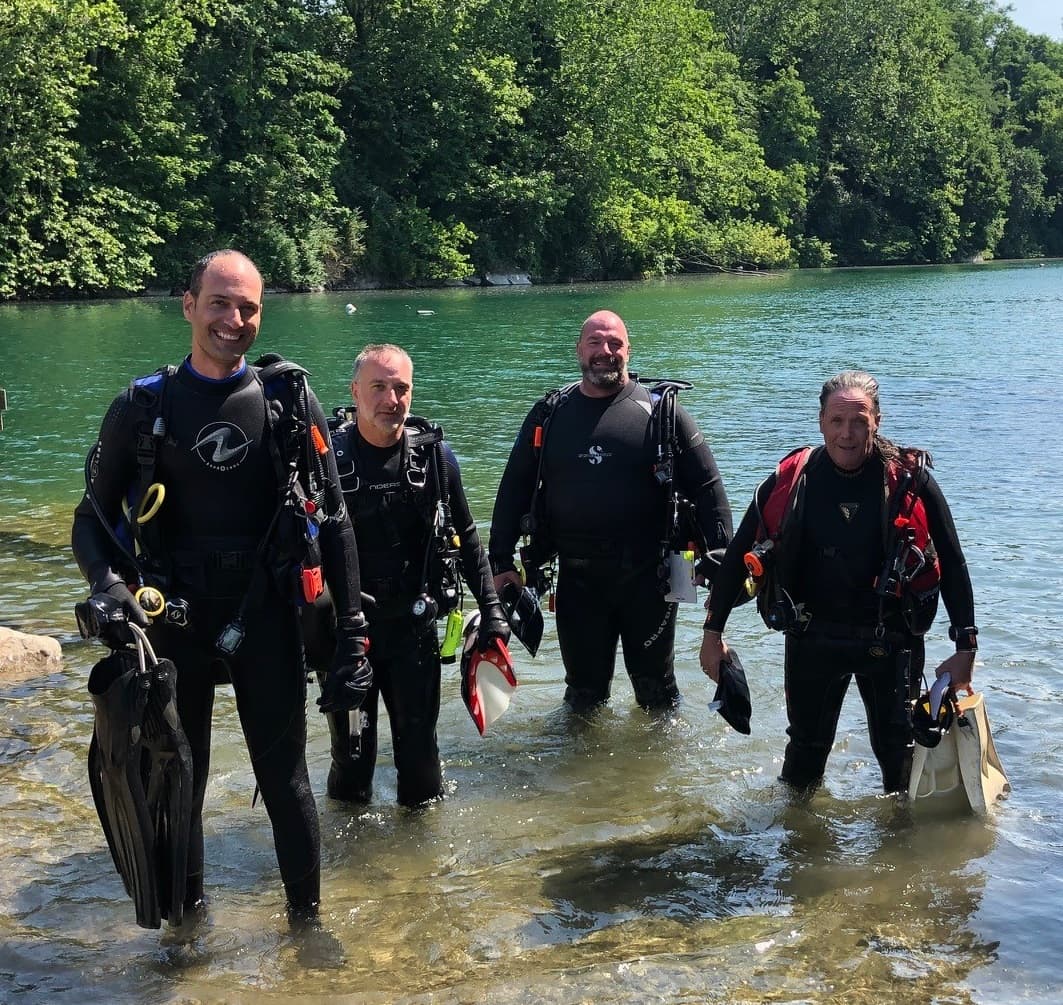
Hydes Quarry
Maryland, 🇺🇸 United StatesBeginner
DifficultyBeginner
Description
Hydes Quarry in Harford County, Maryland, provides the Mid-Atlantic region's diving community with a controlled, accessible freshwater environment that has served as a training ground and recreational destination for Maryland and Baltimore-area divers for many years. Quarries occupy a particular place in the American diving ecosystem: landlocked states and regions with limited coastal access rely on these former industrial sites as the proving grounds where divers develop and maintain their skills, and Hydes has fulfilled that role reliably for the communities within reach of its Harford County location. The quarry's geological character reflects the rock of central Maryland's Piedmont province—metamorphic and igneous formations that produced the stone once valuable enough to mine. Unlike limestone quarries common in more southerly karst regions, Maryland's Piedmont quarries are cut from harder rock that weathers differently and creates a distinct underwater environment. The quarry walls drop away with the angular precision of cut stone, creating the sheer vertical faces that give quarry dives their characteristic feature: the ability to hover at mid-water alongside a wall, watching the gradation from shallower illuminated zones to the darker bottom, without the current management demands of ocean wall diving. Visibility at Hydes Quarry is considerably better than Maryland's Chesapeake Bay waters—freshwater lakes and quarries clear of the tidal turbidity and sediment loads that characterize estuarine diving. On good days, visibility reaches into the fifteen to twenty foot range, occasionally better, giving divers the opportunity to appreciate the quarry's geometry and navigate between any submerged features with reasonable visual range. Water temperature stratifies seasonally, with cold bottom layers year-round and warmer surface water in summer, creating a thermocline that some divers find novel and others find uncomfortable as a reminder to bring appropriate thermal protection. For beginner divers, Hydes provides the low-stakes environment that builds confidence. The absence of current, the defined bottom depth, and the proximity to the surface in shallower areas means that basic skill practice—mask clearing, regulator recovery, buoyancy adjustment—can be conducted without the pressure that ocean conditions sometimes impose. The quarry's relatively compact area also means that a guide or instructor can maintain visual contact with students throughout a training exercise, a practical advantage for certification courses and skill refinement programs. Freshwater fish have colonized the quarry from surrounding waterways and have built populations within its confines. Largemouth bass are the most commonly encountered sport fish, their territorial behavior making them reliable dive companions in the shallower, structure-rich zones. Bluegill and other sunfish appear in shoals near the quarry walls, attracted by the aquatic insects and small invertebrates that inhabit the rock surfaces. Crayfish move across the quarry bottom with characteristic purposefulness, their foraging behavior providing entertainment for divers who have exhausted other observations. Hydes Quarry's position in the broader Maryland diving landscape places it within a cluster of similar sites that serve the state's inland diving community. For divers based in Baltimore, Harford County, or surrounding areas, it represents the most practical option for skill maintenance between bay dives or trips to more distant ocean destinations. Its beginner-appropriate conditions, reasonable access, and the established community of local divers who use it regularly make Hydes a welcoming introduction to Maryland's freshwater diving options.