Northwest Dropoff
Grand Turk, 🇹🇨 Turks and CaicosIntermediate
DifficultyIntermediate
Description
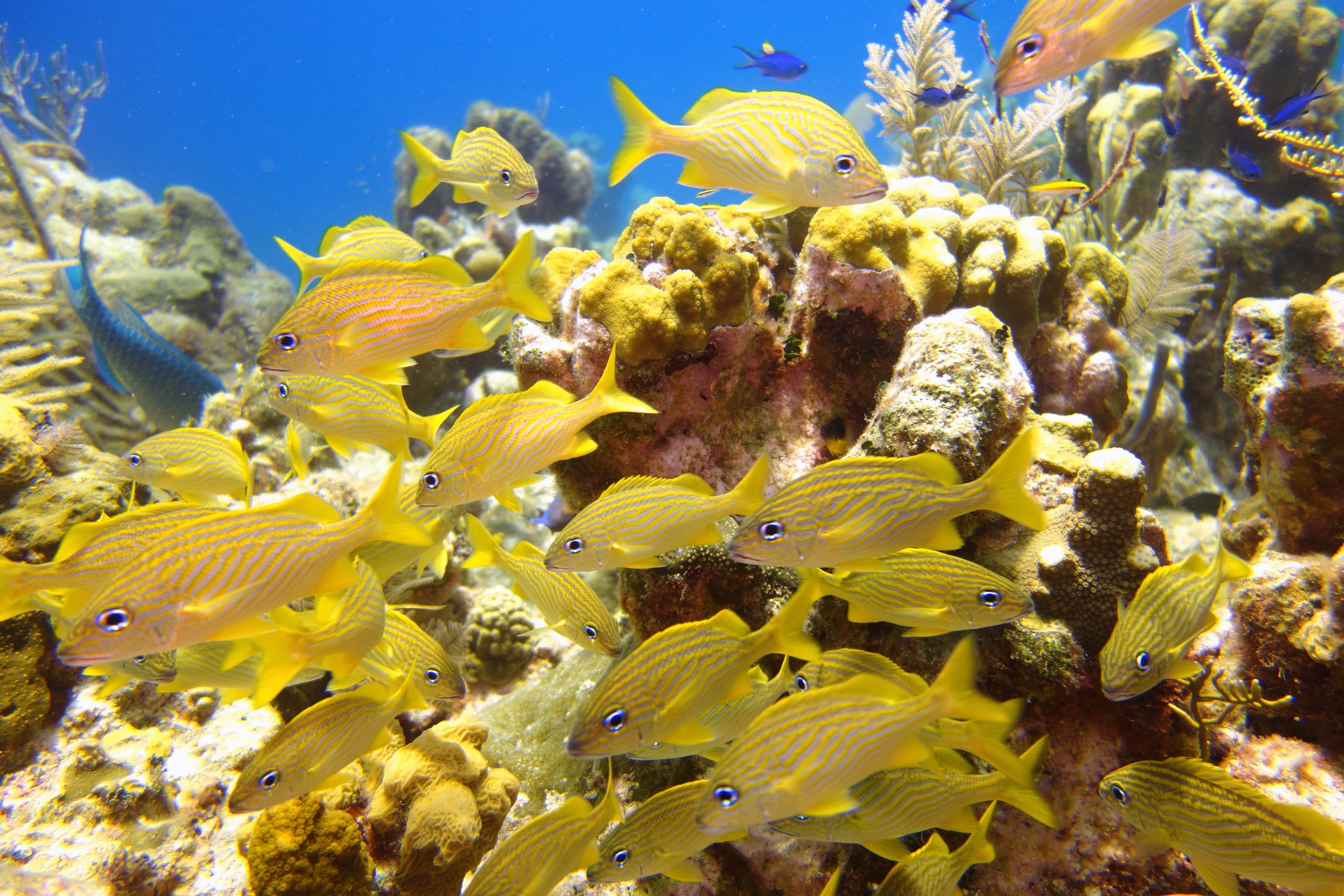
The Northwest Dropoff is one of Grand Turk's premier wall dives, positioned at the northern tip of the island where the reef shelf ends abruptly and the Columbus Passage begins its vertiginous descent. This is a site defined by geography: you are diving at the very edge of an oceanic canyon, one of the deepest natural passages in the Atlantic basin, where the seafloor lies more than two thousand metres below. The site's northern exposure means it receives reliable current — often a gentle drift that makes navigation effortless and brings with it the pelagic life that defines Grand Turk's diving reputation. Begin on the shallow reef terrace at eight to twelve metres, where the coral garden is lush and undisturbed. Elkhorn and staghorn corals reach upward in well-recovered colonies, sea fans sway in the current, and the reef teems with the ordinary brilliance of Caribbean reef fish — parrotfish in their iridescent finery, the flash of blue chromis above the corals, and the constant patrol of surgeonfish along the bottom. At the wall's lip, the ocean floor simply vanishes. The descent reveals one of the site's great rewards: a gallery of sponge life that rivals anything in the Caribbean. Giant orange barrel sponges dominate the upper wall, some growing to extraordinary size after decades of undisturbed development. Rope sponges drape in multicoloured curtains down the rock face, and encrusting sponges paint the limestone in reds and purples. At depth, black coral forests begin to appear, their branching forms emerging from the dim blue in mesmerising shapes. Pelagic encounters are the other draw. Hammerhead sharks have been spotted here during winter months, patrolling the wall's edge in search of rays. Caribbean reef sharks are regular visitors, typically cruising at mid-water depth with the easy confidence of apex predators. Eagle rays — often in pairs or small groups — soar past the face of the wall with a grace that never fails to stop a diver mid-kick. The Northwest Dropoff is ideal for intermediate divers with solid buoyancy, as the sheer drop and potential current demand good air management and drift diving protocols when tidal flow is running. Whale songs are frequently audible here between January and April, a haunting acoustic backdrop to an already exceptional dive.